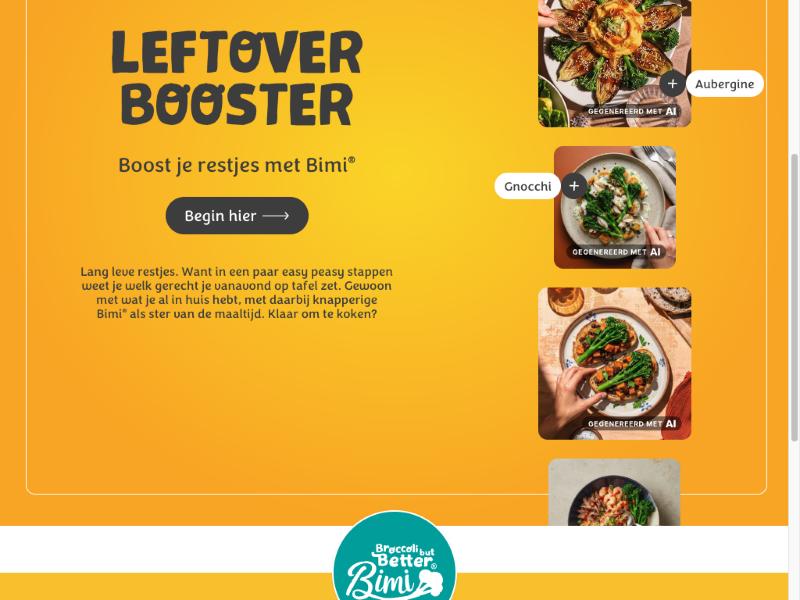
In the Netherlands, the average household wastes around 34 kilos of food a year. For the Week Against Waste, Bimi® and the Gardeners agency wanted a tool that helped people use the ingredients that usually end up in the bin. The project came to .monks, where I work as Sr. Creative Technologist. One simple rule: whatever you've got, you can boost it with Bimi®.
Gardeners' starting point was blunt: influencers and journalists aren't waiting for another recipe generator — there are plenty. They're looking for something worth talking about: an experience that feels considered, surprising and genuinely useful. And the brief already looked past launch: the tool had to be modular and theme-flexible, ready to come back for Easter, Christmas, Keti Koti or Eid al-Fitr with different photography, colours and seasonal recipes.
"What do you have at home?" — you type what's left and it becomes tags. Rice and carrot, in my test run.
Italian, Asian, Mexican, French, Dutch, Mediterranean — or "surprise me".
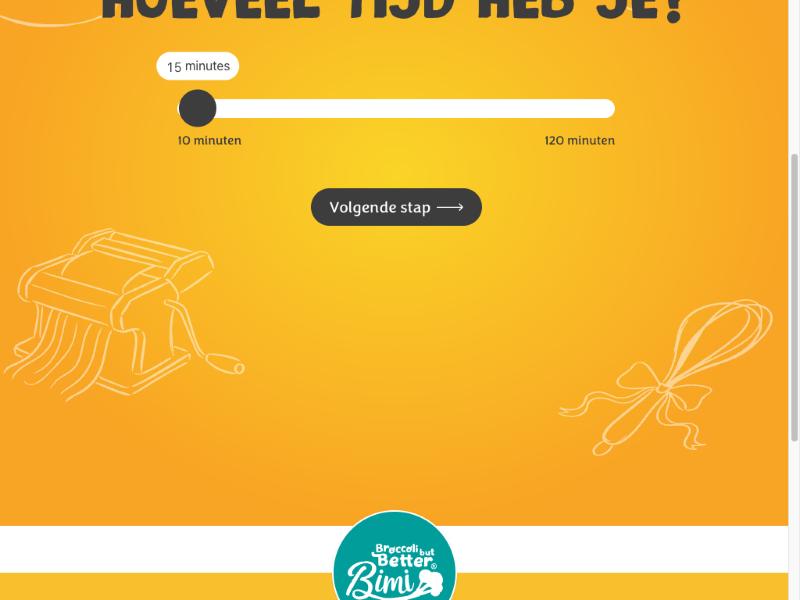
A slider from 10 to 120 minutes. The recipe fits your evening, not the other way around.
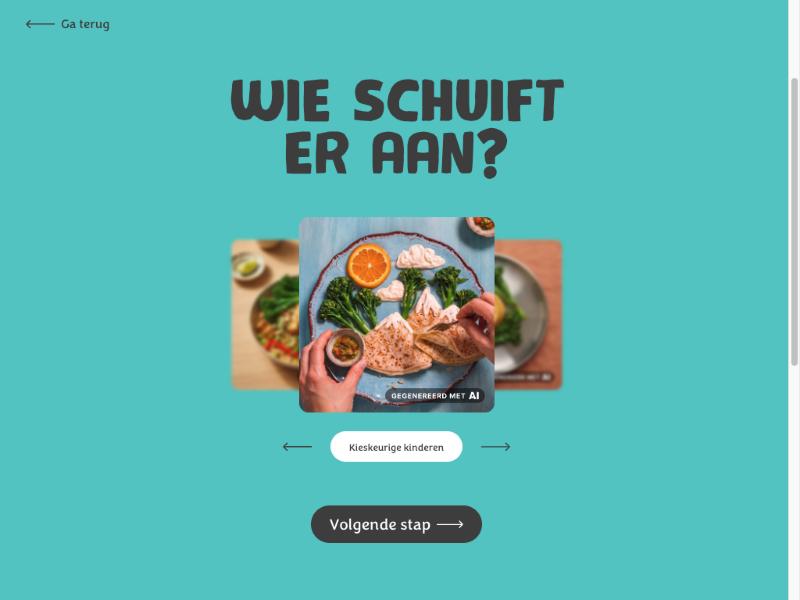
Picky kids, someone to impress, family dinner or healthy — each occasion changes the plate, the props and the art direction of the photo.
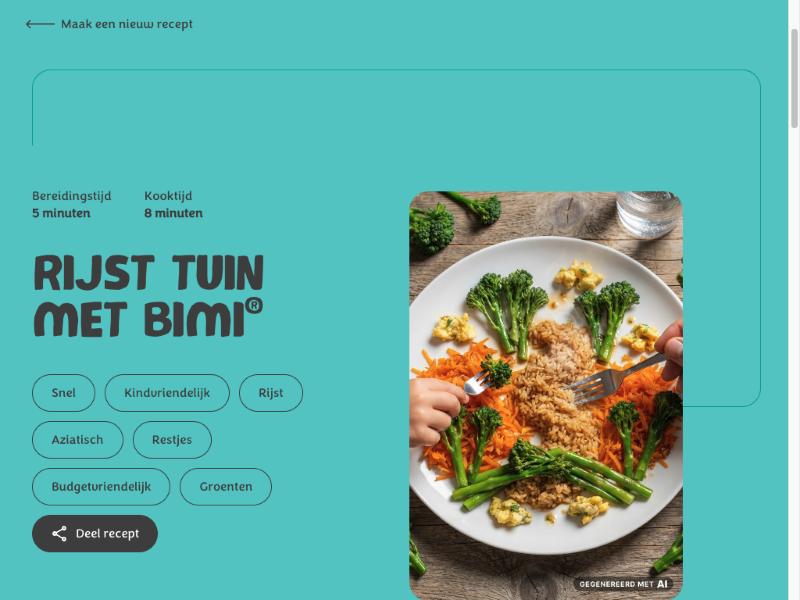
Gemini writes the recipe — always finished with Bimi® — and plates it in AI-generated food photography, every image labelled "gegenereerd met AI".


The photography follows one fixed rule: top-down with a slight tilt, hands always present, the dish always the hero — the shot people naturally take and post. What shifts per occasion is everything else: plate, cutlery, surface, linen and props move together to tell that moment's story.
The plate as a playground: build-your-own chaos, hidden greens, and food that makes kids forget they're eating their vegetables.
The refinement of a Michelin-starred restaurant combined with the boldness of Gen-Z internet culture.
The drama of a show-stopping centrepiece with the comfort of a dish made with love.
Clean eating as aspiration rather than restriction: vibrant, micronutrient-rich plates for the everyday athlete.
The least glamorous, most important part of shipping generative AI for a brand: the hard rules around the model.
Visible and whole on every plate — never cut, puréed or blended. And never suggested raw. Brand rules, hardcoded into the prompt logic.
The system prompt explicitly prohibits dangerous, toxic or inedible ingredients — and any offensive output.
Allergy option included, with a clear reminder: always check ingredients yourself. The tool doesn't guarantee allergen safety, and never follow a generated recipe blindly.
Every image and recipe carries its "gegenereerd met AI" label — and behind it, rate limiting against spam and scraping.
The browser never talks to Gemini — it calls our own keyed, rate-limited API, and the FastAPI service runs the pipeline against Gemini on Vertex AI, streaming the recipe back step by step as each stage finishes.
Cloud Run scales from a handful of instances to dozens in under a minute when the campaign pushes.
Blue/green with manual approval to production and rollback in seconds. Multi-zone Firestore with daily backups behind it.
OIDC authentication from the pipeline — zero API keys stored in the repo. All infrastructure declared as code with Terraform.
Client work made at .monks — my full-time job — with the Gardeners creative team for Bimi®. The captures are from the production tool; every food image you see was AI-generated by the tool itself.