00 / exploration
Explorations
Side projects where I test how far an idea can go when I pair with AI tools — end to end, from first sketch to store-ready.
Senior Creative Technologist at .Monks — 15+ years making machines creative, interactive, and human.
View Work ↓Side projects where I test how far an idea can go when I pair with AI tools — end to end, from first sketch to store-ready.
Freelance AI consultancy for Omnicom Media Chile's local team — unblocking AI video creation for Lider's social campaigns: character consistency across generations, and advising on an API-based model pipeline so the team can answer client demands fast.
A fully AI-generated film for Lider's Día del Niño campaign — no cameras, no 3D. Built with Google's Omni model and NanoBanana in a pipeline designed for iteration: every shot stays editable, so a change at any point — a character, a prop, a look — propagates through previous and upcoming shots instead of forcing a regeneration from scratch. The final sequences were merged into one continuous story and upscaled with Topaz to broadcast quality.
This is where the collaboration began — a proof piece to show the team that AI could hold a consistent character and tell a story. The brief called for a generic cat; as a cat owner, I used photos and the name of my real one instead. The client loved her, the audience responded, and Canela became a recurring character. No 3D, no rigging: identity held together purely by reference frames.
The second engagement with OMD Omnicom: bringing Lider's classic mascot back to life. Working only from past campaign imagery, I guided NanoBanana to reconstruct Ciby's identity in consistent hero frames — then generated a new set of pieces that put a character from the archives back on screen, without redesigning a thing.
Characters before content — every piece starts from a personality, not a product shot.
Ground the character in something real. Canela began as photos of my actual cat — name included; Ciby began as Lider's existing mascot from past campaigns. Real references give AI characters a soul generic prompts can't.
Give each character a job in the store world — Canela works checkout and restocks aisles, Ciby runs missions. Scenes are written as story beats, so every video is a small episode rather than an ad.
Lock "hero frames" with the client before generating any motion — canonical stills that define look, wardrobe, lighting, and brand fit. Sign-off happens on frames, which are cheap to iterate, not on videos, which aren't.
Let the audience steer. Canela was meant to be a one-off generic cat — client and audience response turned her into a recurring character.
A modular image-to-video pipeline where every stage stays editable after the fact.
Curate reference sets — real photos for Canela, past campaign frames for Ciby — covering angles, lighting, and expressions the character will need.
Generate hero frames with NanoBanana, iterating until identity holds across contexts: same face, same wardrobe, same brand palette in a checkout, an aisle, or a spaceship.
Drive video generation with Google's Omni model from those frames. Because shots are generated from shared references, changing a character or prop at any point propagates through previous and upcoming shots — no regenerating from scratch.
Finish like a film: Topaz upscale to broadcast quality, voice and sound with ElevenLabs, then subtitles, motion graphics, and audio mix in post. Delivered as 16:9 film and 9:16 social cuts.
Building real experiences where AI does something genuinely useful — or genuinely surprising.
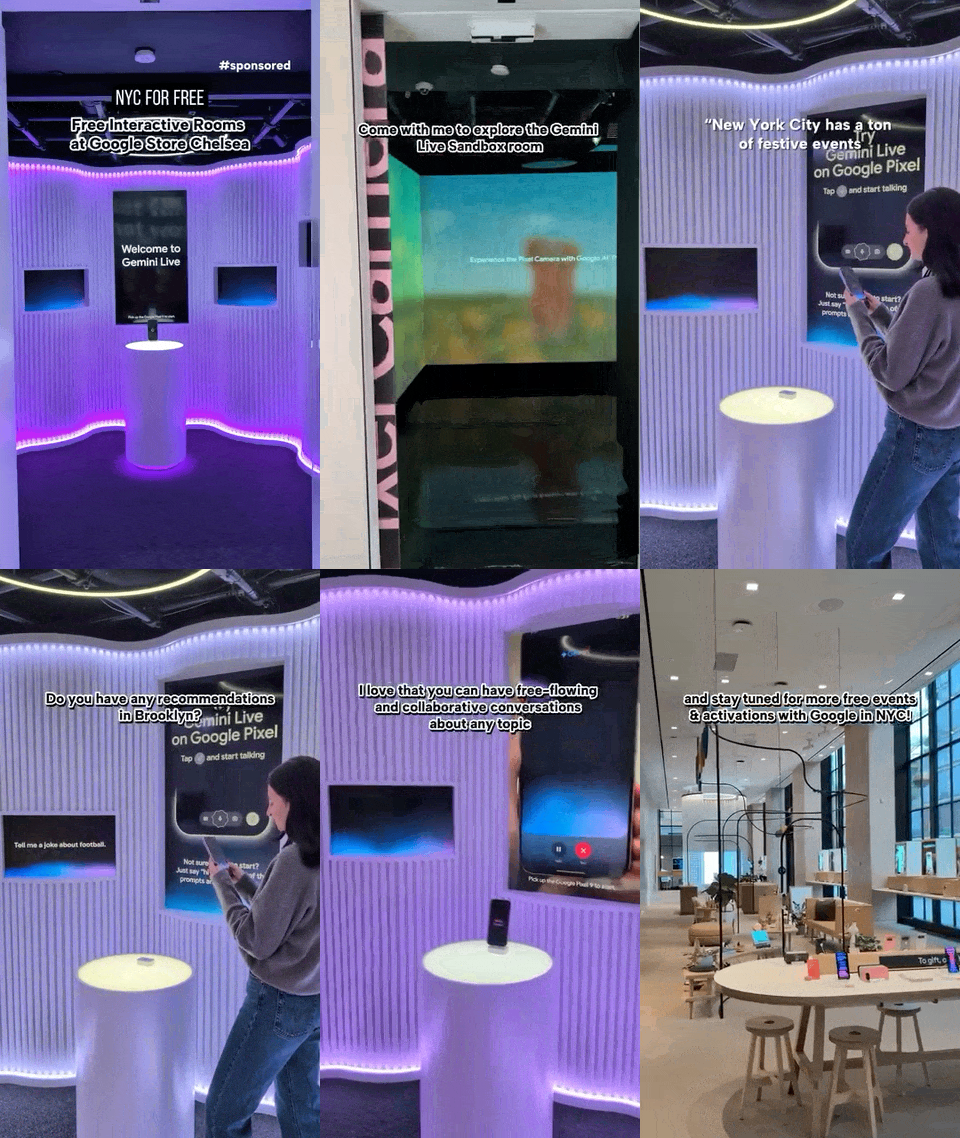
A physical installation in New York where Gemini responds to visitors in real time — AI output driving generative visuals live, not pre-rendered. Built to survive a public crowd, all day, every day.
View Project →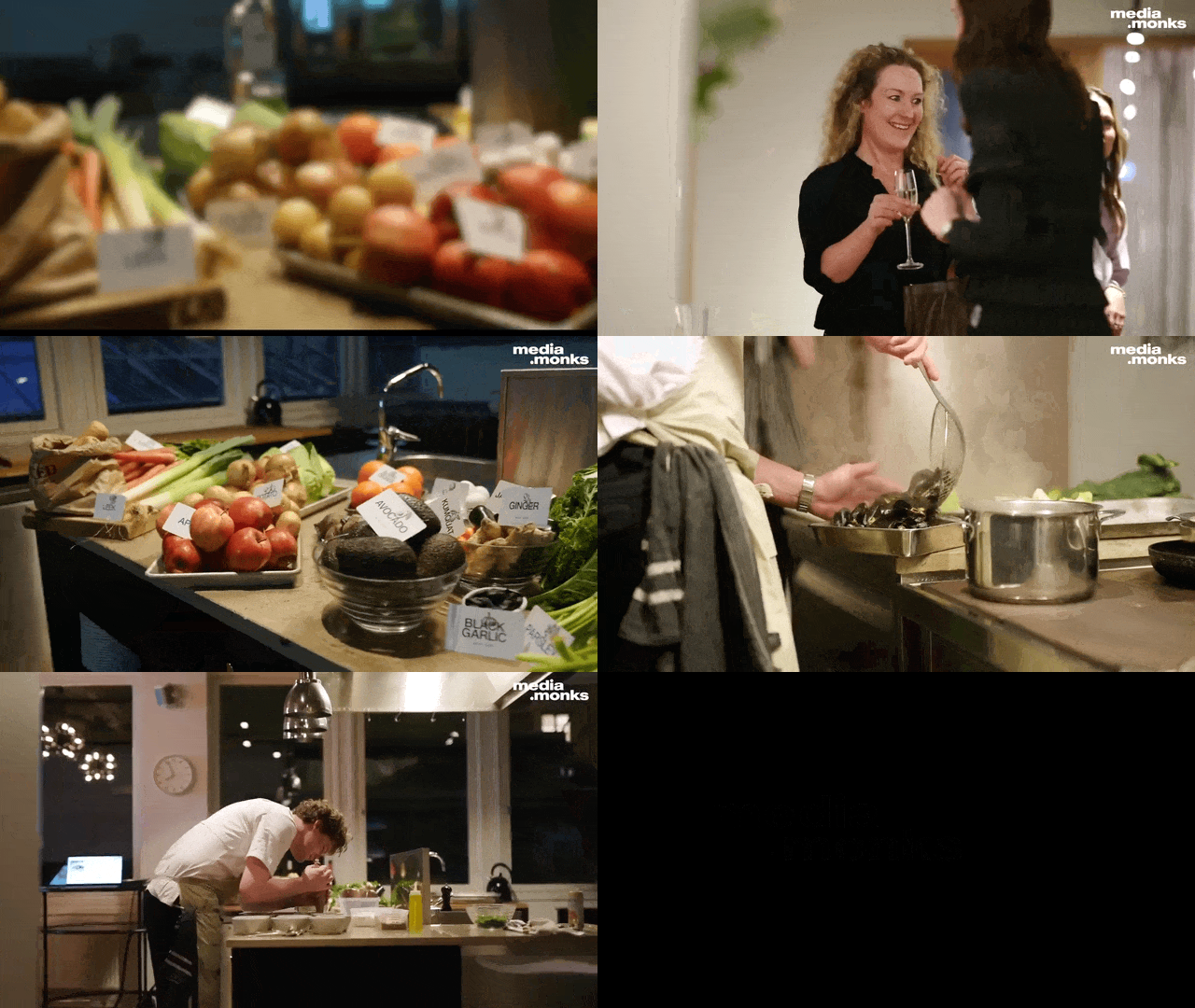
A multi-model pipeline that generates complete, personalized recipes — the right dish for the right person, with imagery to match. LLMs handle the cooking logic; image models plate it.
View Project →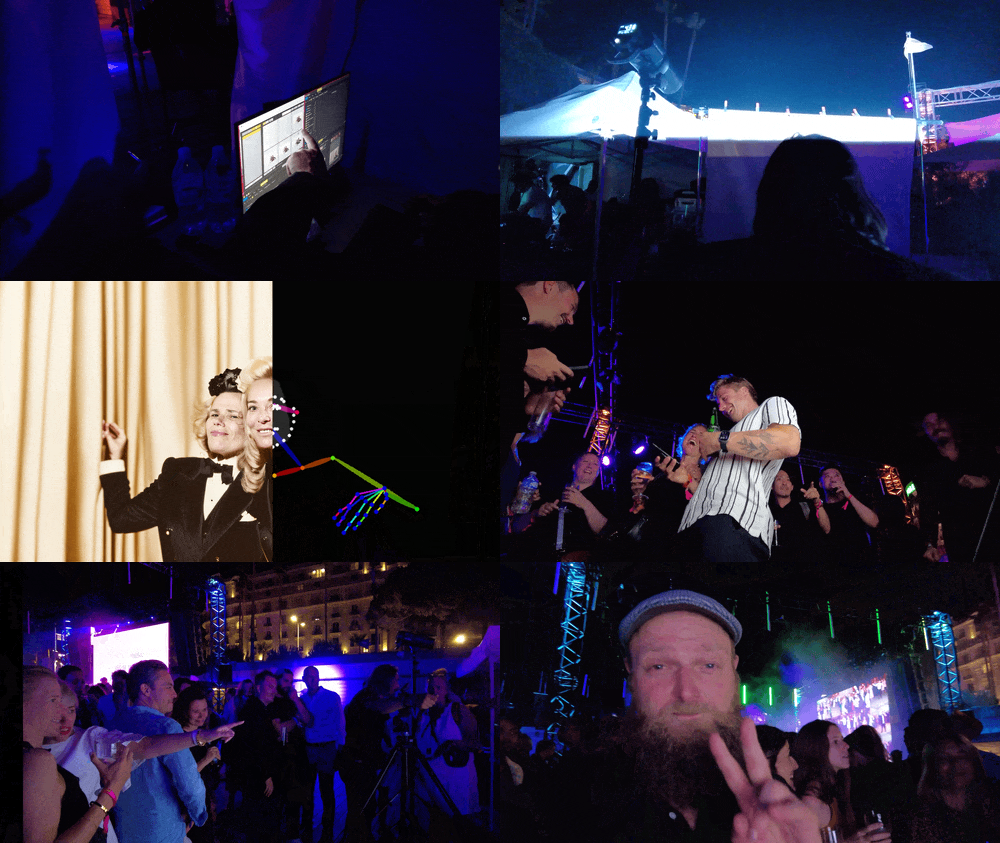
One of the first live Stable Diffusion photobooths — before this was a product category. Walk in, get photographed, walk out as generative art. Latency tuned until the magic felt instant.
View Project →Interactive work spanning AR, physical computing, accessible design, and brand installations.

Inclusive design for children with reading disabilities — adaptive UI, simplified navigation, and accessible interactions.
FWA Case →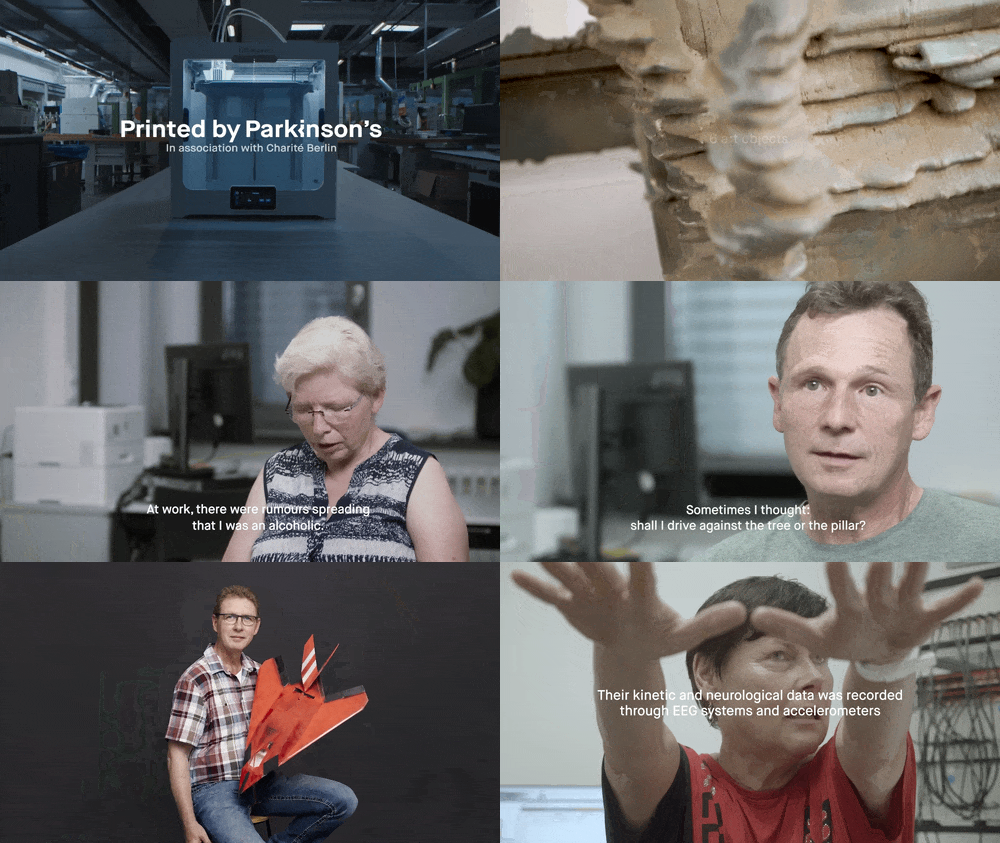
Tremor data translated into 3D-printed objects — making an invisible condition tangible.
FWA Case →Web-based volumetric video experience — a holiday message you could walk around.
FWA Case →Motion-sensor installation for the Deerupt launch — real-time graphics driven by how you move.
FWA Case →I'm Luis — theguaz online: Guajardo + Díaz, a handle I coined back when Hotmail was the new thing, and never let go. A Chilean creative technologist based in Hilversum, working at .Monks. I started in interactive websites and physical installations over fifteen years ago, and moved into generative AI early — building one of the first real-time Stable Diffusion photobooths back when that required duct tape and conviction.
My favorite brief is the one without a reference. I prototype fast, mix physical computing with AI models, and obsess over the last 10% — the part people actually feel.
Also: my cat Canela is now a Walmart Chile brand character. Possibly my proudest production deploy to date.
I work with brands, agencies, and startups to build AI-powered experiences that are actually interesting. From proof-of-concept to production pipeline — first call is always free.